
Optimal Heavy Industry Production Cycle
Posted: 2013-02-15 Filed under: eveonline, industry, market, nullsec, ships | Tags: isogen, megacyte, mexallon, nocxium, pyerite, tritanium, zydrine 3 CommentsOverview
Our Heavy Industry branch has been increasing in capacity over the past three months and we’ve reached a point where we now have an established, balanced cycle.
This balance comes from many factors including the amount of compression or ship BPOs we own, ISK velocity coming in from purchases or sales, and time needed to haul or compress materials. Too much or too little of either factor and our porridge is no longer ‘just right’.
Production Cycle
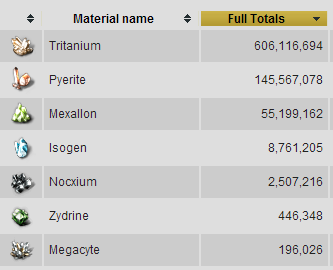
The optimal cycle we have found settles is around 18 days. With every cycle we are consuming around 12-13 B ISK worth of materials in order to keep our BPOs busy.
With the aid of the DRK Industrial Tracker, we can easily see how long it takes to compress, build component parts, and finally build the capital hulls in a easy to read visual timeline. If you produce items and need a solution for tracking materials, quotes, projects, and sales I highly recommend this product.

Results
As the amount of time put into daily trading slowed down towards the 2012 holiday season, I put the direction of the Heavy Industry branch in the hands of Raath (@staticmapper), my partner. The operation started to get its legs in December and the results are apparent.

Wormhole Space in 2009 and 2010
Posted: 2013-02-08 Filed under: eveonline, history, industry, screenshot | Tags: aperture harmonics, arkonor, bistot, c5, c6, crokite, drake, megacyte, rorqual, sleeper, tengu, thanatos 6 CommentsHere are a few pictures that highlight my corporation’s venture into Wormhole space to strike it rich.
2009
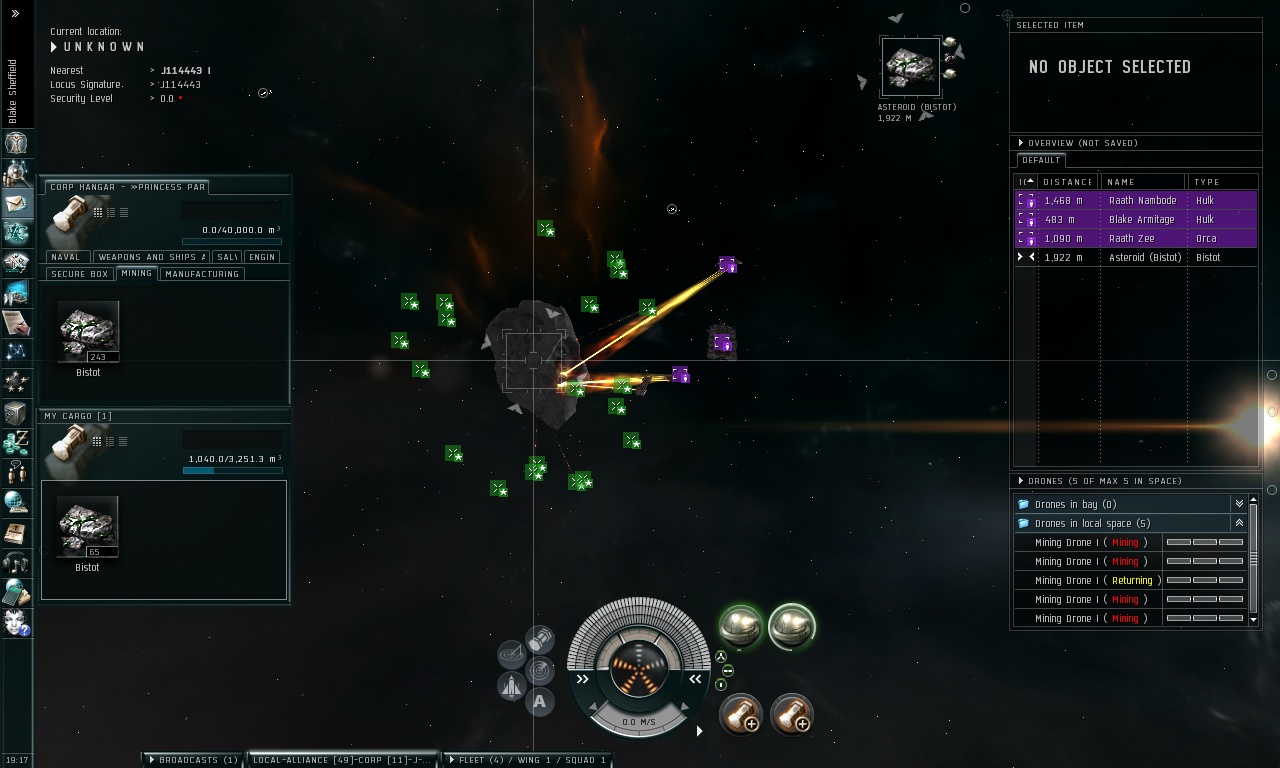
The daily routine was scanning for sites, mining ABCs with Orca boosts, and compressing Ore down for transport to Jita.
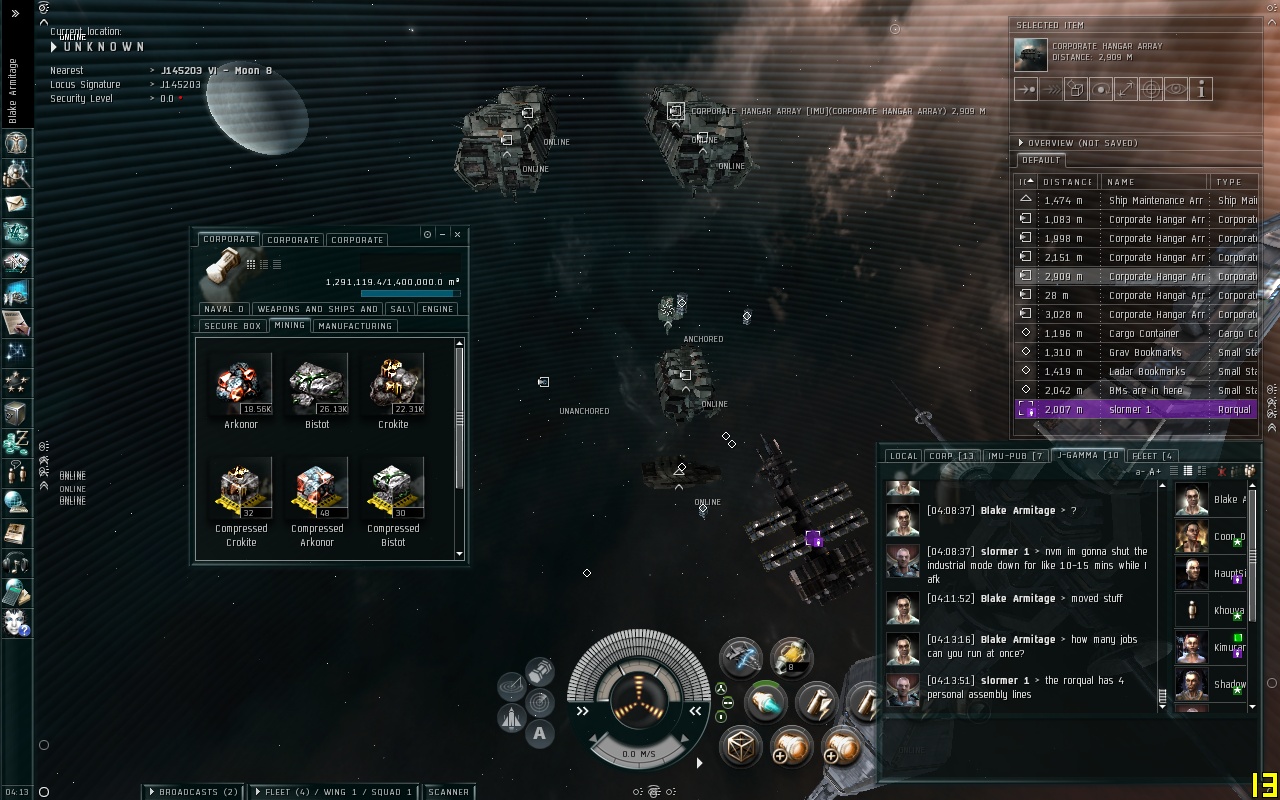
Our capacity to haul large amounts of Ore out of Wormhole to Jita increased significantly when we got a Rorqual into our C6.
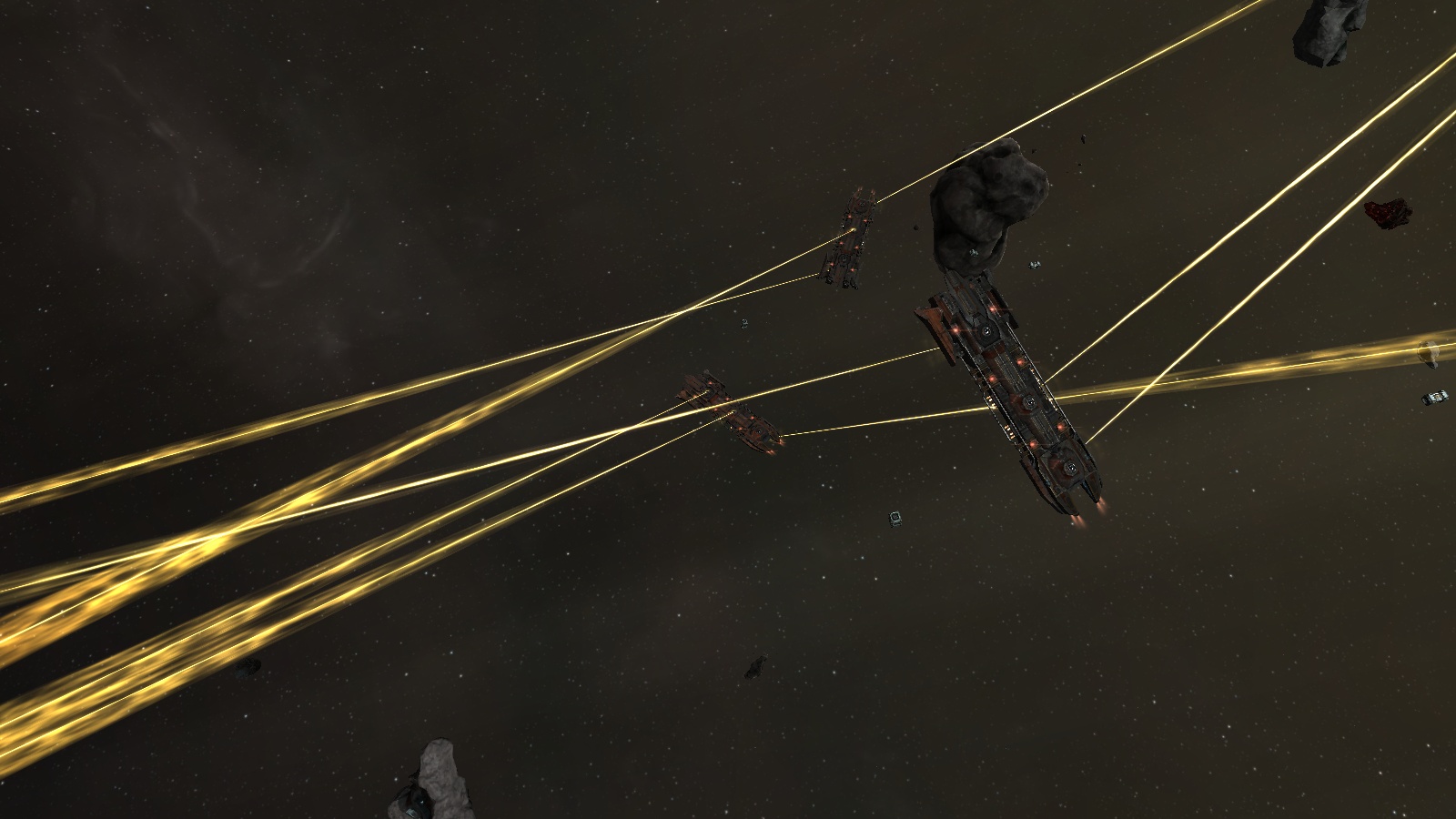
Boosted Hulks mining Arkonor was king at the time. Each full jetcan was worth around 13-16M.

Orca boosted mining operation.
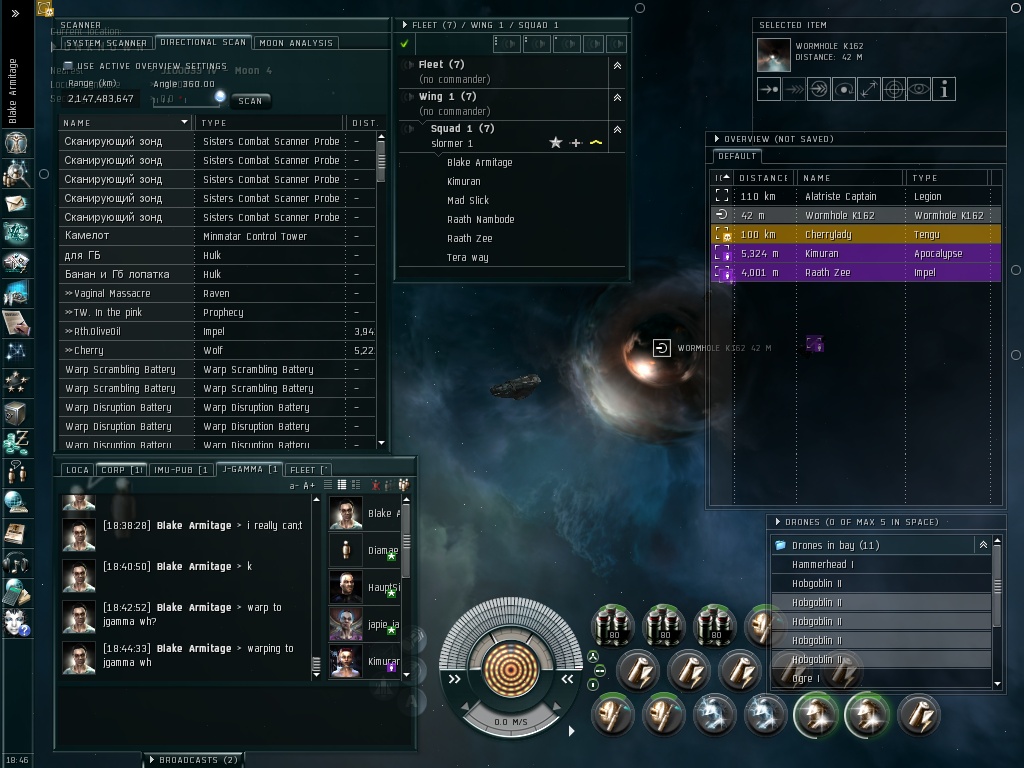
We once caught a Tengu with a tank that we could not break. After toying around with it for a while, we eventually let the pilot got and gave her the location of a return Wormhole as we destroyed her scanning alt.
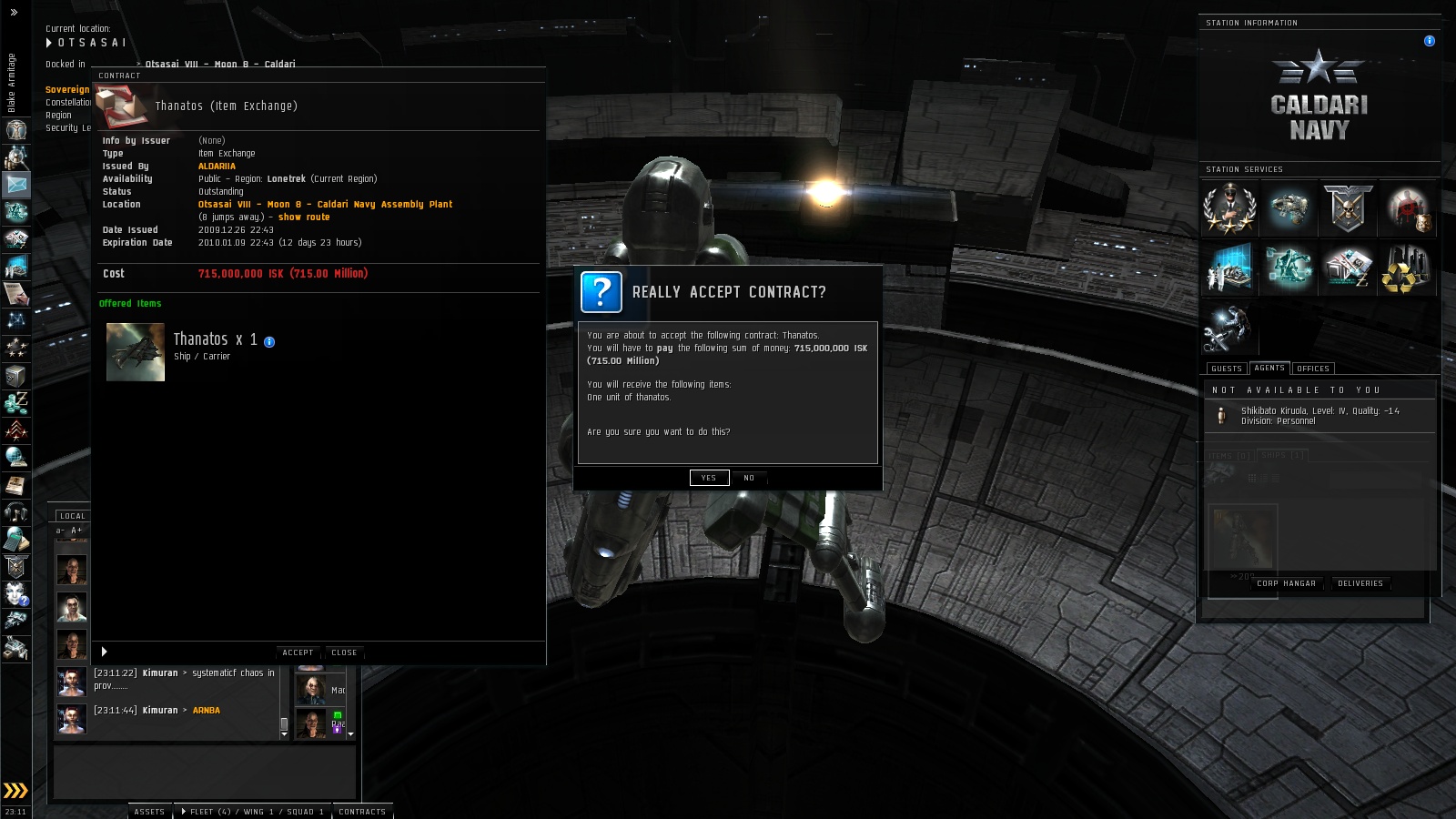
As we build up our PVE arsenal, we needed Carrier support to run the C5/C6 sites. I paid 715M for a Thanatos during this time and I still am in possession of this specific Carrier.
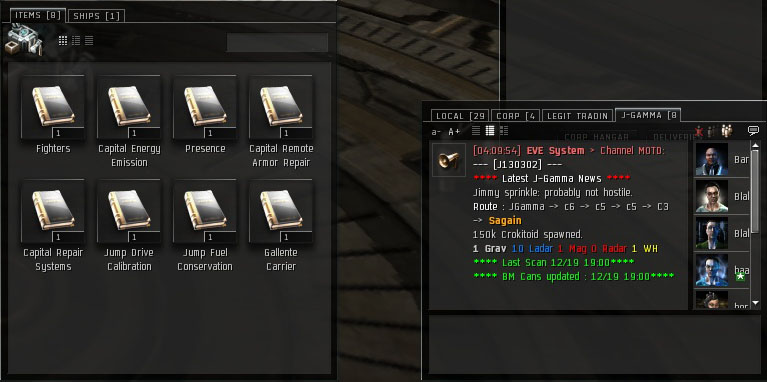
Purchasing skills for the Carrier. Notice that we used the MOTD to communicate on the current Wormhole status.

1600 plated Typhoon mass collapsing a connecting Wormhole.
2010

As we became more proficient in Unknown space, we started to train up skills for Tengu, Drake, and other PVE specific ships.

Our weekly hauls started to get large and larger as our mining capacity increased.

Thanatos beauty shot after emerging from a connecting Wormhole.

Another Thanatos shot.

Carrier assisted site running.
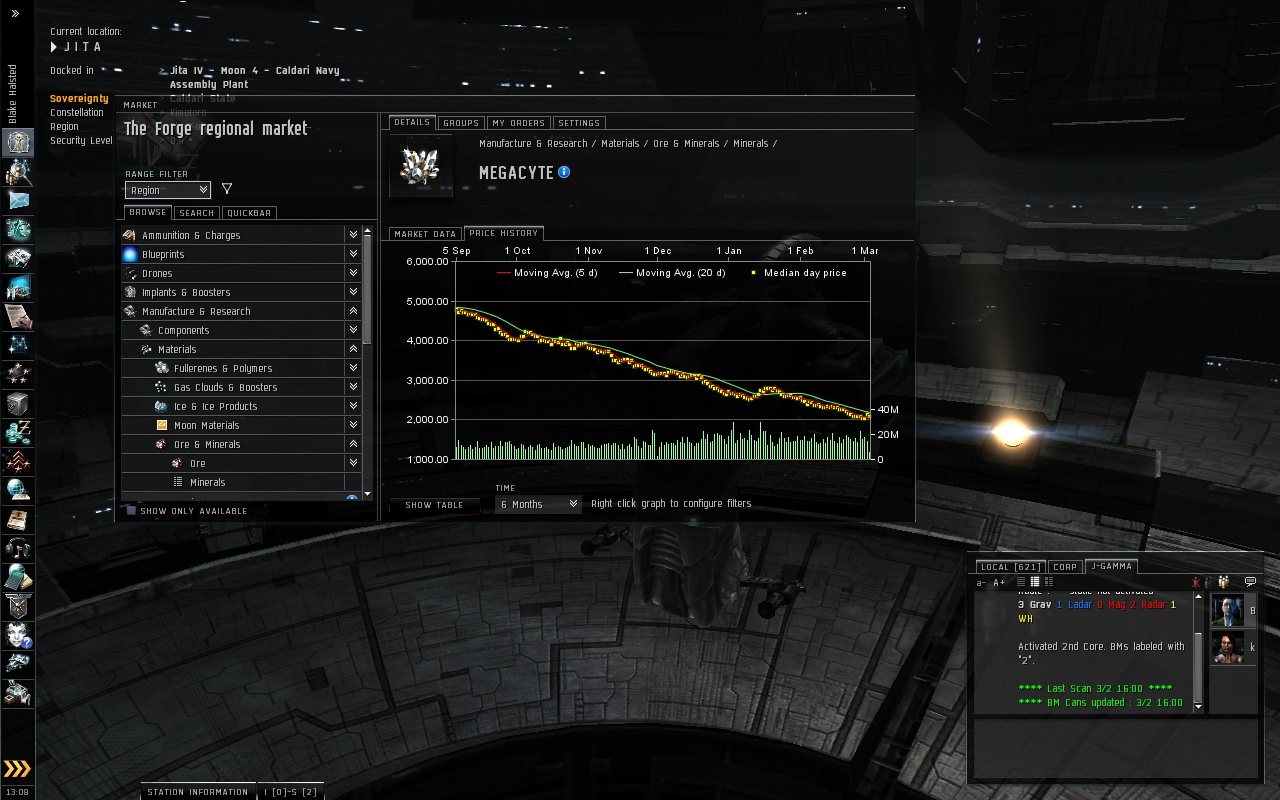
This is a shot of Megacyte, which was king at the time. Due to the large availability of ABC ore in Wormhole space, mining groups like us were driving the price down.
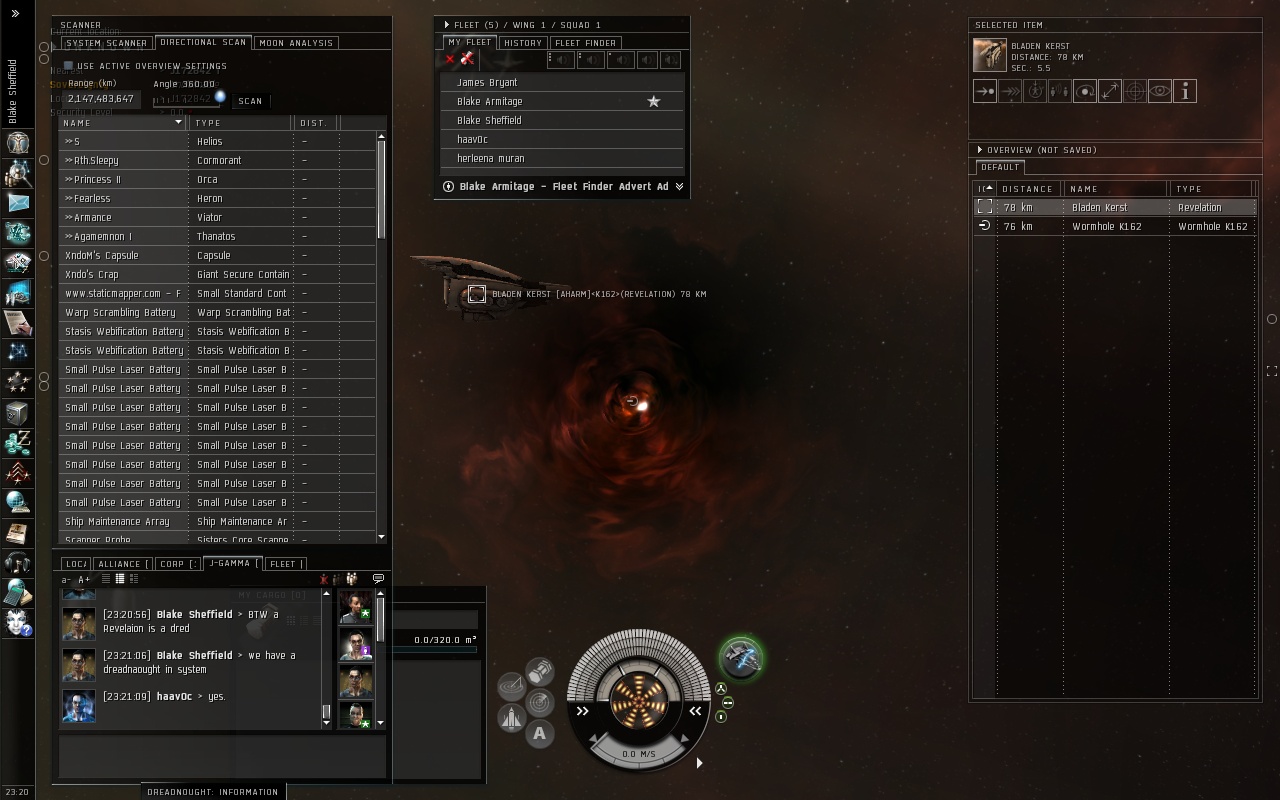
When you inhabit the highest class of Wormhole space, you are bound to run into some major players. Here is a shot of an Aperture Harmonics’ Dreadnought bring used to mass collapse a connecting Wormhole that was connecting our two systems.

Aperture Harmonics fleet coming into our system to scout for prey.

You spend a lot of time looking at these in Unknown space.

One of the most powerful things in Unknown space is Intel. If you have the knowledge, you can dictate everything. The little Helios was one of the most useful ships for me during my time in Wormhole space.

Defending Tengu shot.

Space potato beauty shot. We had a Remote Repping Dominix doctrine that served us well.

Protecting our home.

Every few weeks the rate of respawn for all the sites would dwindle down to almost nothing. Like nomads we would find a new home and setup shop to strip the system.
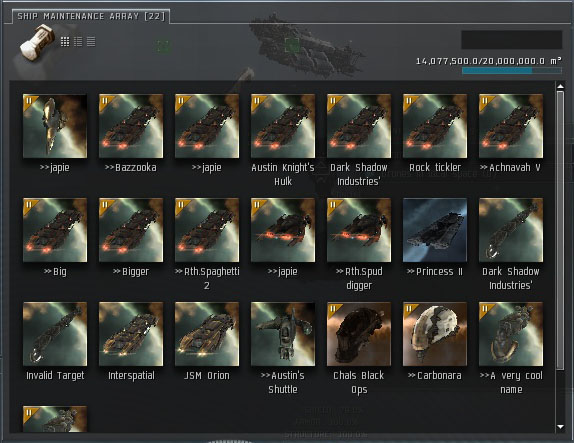
Industrial might.
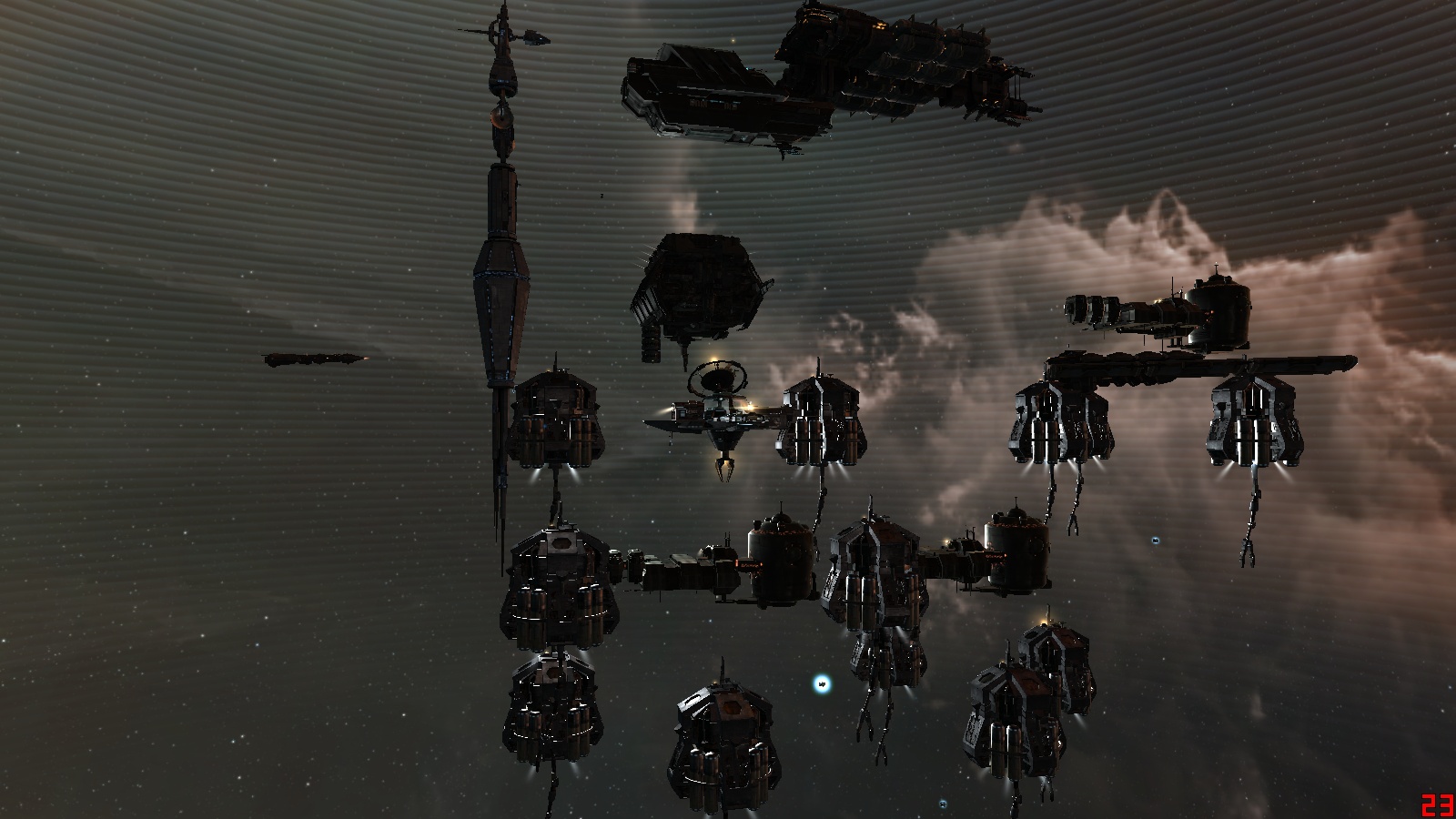
Extreme hatred for the POS/Reaction UI.

Capital ship shot.
Historical Trading Performance Numbers
Posted: 2013-02-08 Filed under: industry, market | Tags: isk, pandemic legion, test 4 CommentsHaving seen TEST’s and Pandemic Legion’s Finance Report, I was inspired to pull up and analyse my own performance numbers to see how I compare to the income streams of larger alliances.
A few MySQL queries and a Pivot Table later, I have some performance numbers for 2010-2012. Turns out I have an average of 2.33% the income of Pandemic Legion.
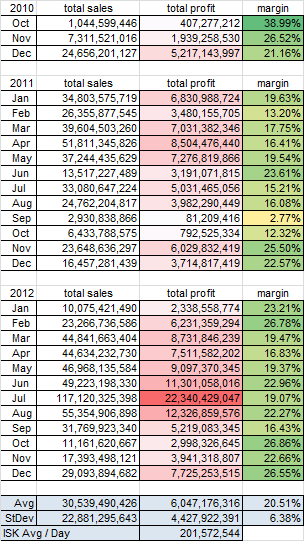
September through October of 2011 was a period where I lost faith in CCP’s ability to deliver new and inspiring content. That lack of interest was directly shown in these performance numbers as I stopped logging into the game.
Trading Performance: Battlecruisers
Posted: 2013-02-07 Filed under: eveonline, industry, market, ships | Tags: drake, hurricane, naga, oracle, talos, tornado 2 CommentsOverview
Given the shakeup coming with the tiericide effort, Armor tanking, and the sweeping changes coming this summer, I feel comfortable disclosing performance numbers for production and trade involving popular Battlecruisers hulls.
Analysis
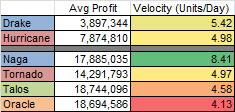
The Drake and Hurricane market has been and continues to be a very competitive market. I contribute this to a few factors.
First there are many industrial people that will not consider the time it takes for them to mine minerals; remember that time is money and the hours that you spend slaving away staring at a rock for a few million an hour could be better spent doing more lucrative activities. Note that this point is not isolated to these hulls and is a common error in production logic for new industrialists.
The PVP and PVE proficiency of the Drake makes it a very popular ship. There will always be a large draw for industry people to focus on this hull, making for high competition.
Lastly, given the time that these two ships have been in the game, many industrialists have these BPOs researched to high levels and have had them for many years.
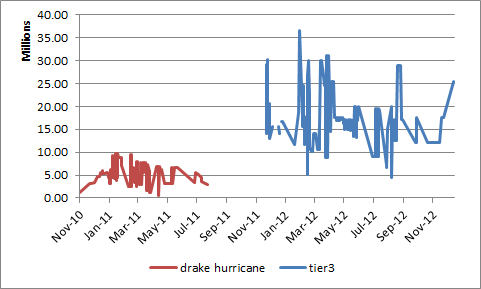
My production and trade focus shifted off of the Drake and Hurricane when the Tier 3 Battlecruisers were introduced as I saw a high demand for them in the PVP arena.
As you can see the trading performance below, they have proven to be far more profitable on average than their older counterparts.
tl;dr
Make Naga, Oracle, Talos, and Tornado hulls not Drake and Hurricane ones.
Visualization of Moon Mineral Concentrations
Posted: 2013-01-30 Filed under: industry, market, nullsec | Tags: atmosphere gases, cadmium, ceasium, chromium, cobalt, dysprosium, evaporite deposits, hafnium, hydrocarbons, mercury, neodymium, platinum, promethium, scandium, silicates, technetium, thulium, titanium, tungsten, vanadium 5 CommentsOverview
In a previous post, I detailed the concentration of Technetium and Cobalt moon locations because they are of particular political interest due to their distribution and the recent rework of the Alchemy reaction for Platinum Technite.
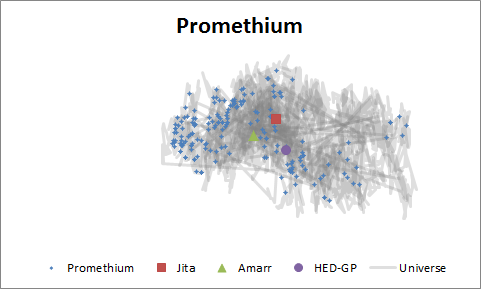
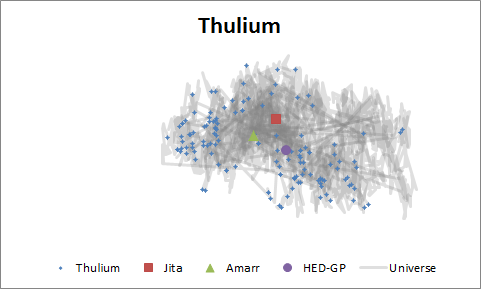
Now I wanted to use my entire dataset to plot out all moon minerals to see if there was any pattern or promise of future monopolistic cartels due to the geographical distribution of the moon minerals.
Data
My dataset contains information on 32,162 moons with a lack of data for Evaporite Deposits; I don’t consider this alarming to my analysis as it is a very common moon mineral.
Since my master dataset was pieced together from a few independent sources, I am not surprised by the inaccuracies or missing data points. As I have stated before, sanitized moon scanning data is usually a closely guarded piece of information by large Alliances and Industrial corporations as a large amount of time and energy has been spent gathering the data.

The raw numbers show that I have very poor coverage in many regions, but we need to consider that not every moon contains a mineral. If I knew the density of moon minerals (how many received minerals versus not in the seeding process), I could get a better feeling of my coverage levels. For now just consider the Green regions having a strong coverage and the Red regions showing poor coverage; ignore the coverage percentage values.
Despite the alarming Red portions that indicate major holes in my dataset, we can see interesting visual results from the initial galaxy seeding process. These seeding trends can help us explain the prices of certain minerals given their location, political atmosphere around specific areas, and weight necessity in the Tech2 production chain. *cough* Technetium *cough*.

Rarity 2
The low value of these types of minerals is due to the sheer amount and distribution of each type. These common minerals are contained in almost every region.

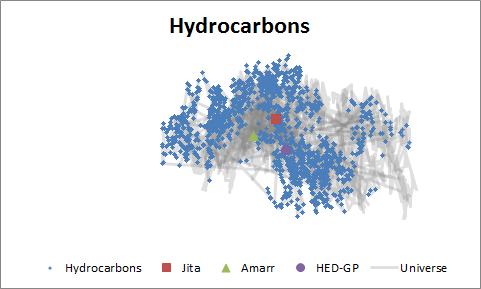

Rarity 8
With these types, we can see a definite skew in the regional location of each type. There are major pockets with a small scattering around the universe.


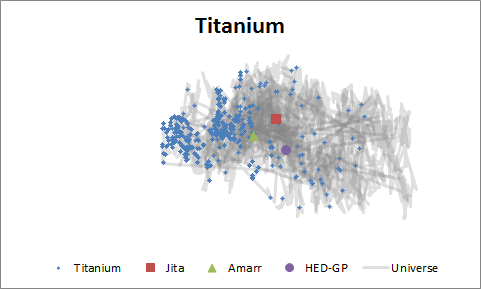

Rarity 16
With the Rarity 16 minerals, there seems to be an even spread across the universe with no major points of concentration.
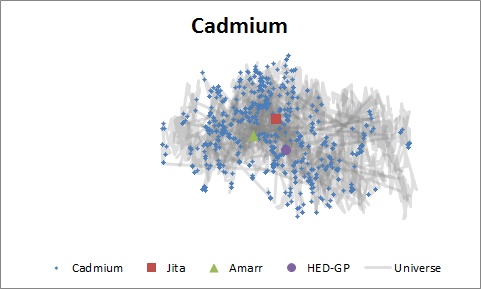
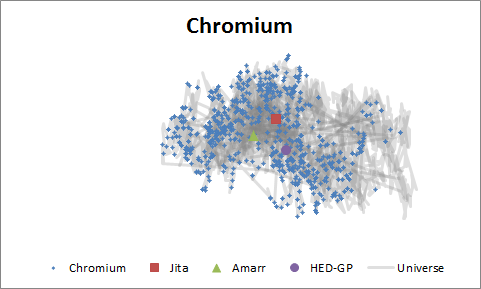


Rarity 32
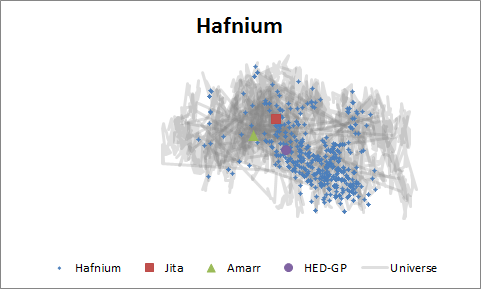
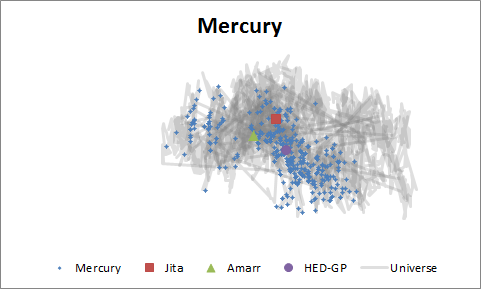
With these moons it seems like each type is dominant in a specific quadrant of the universe. Ceasium in the West, Hafnium in the South, Mercury also in the South, and Technetium having the majority of its concentration located in the North.


Rarity 64
The rarity of these moons is shown with the lack of points on the scatter plot. We can see that they are spread around the Universe, but the lack of quantity keeps each type rare.


 k162space